
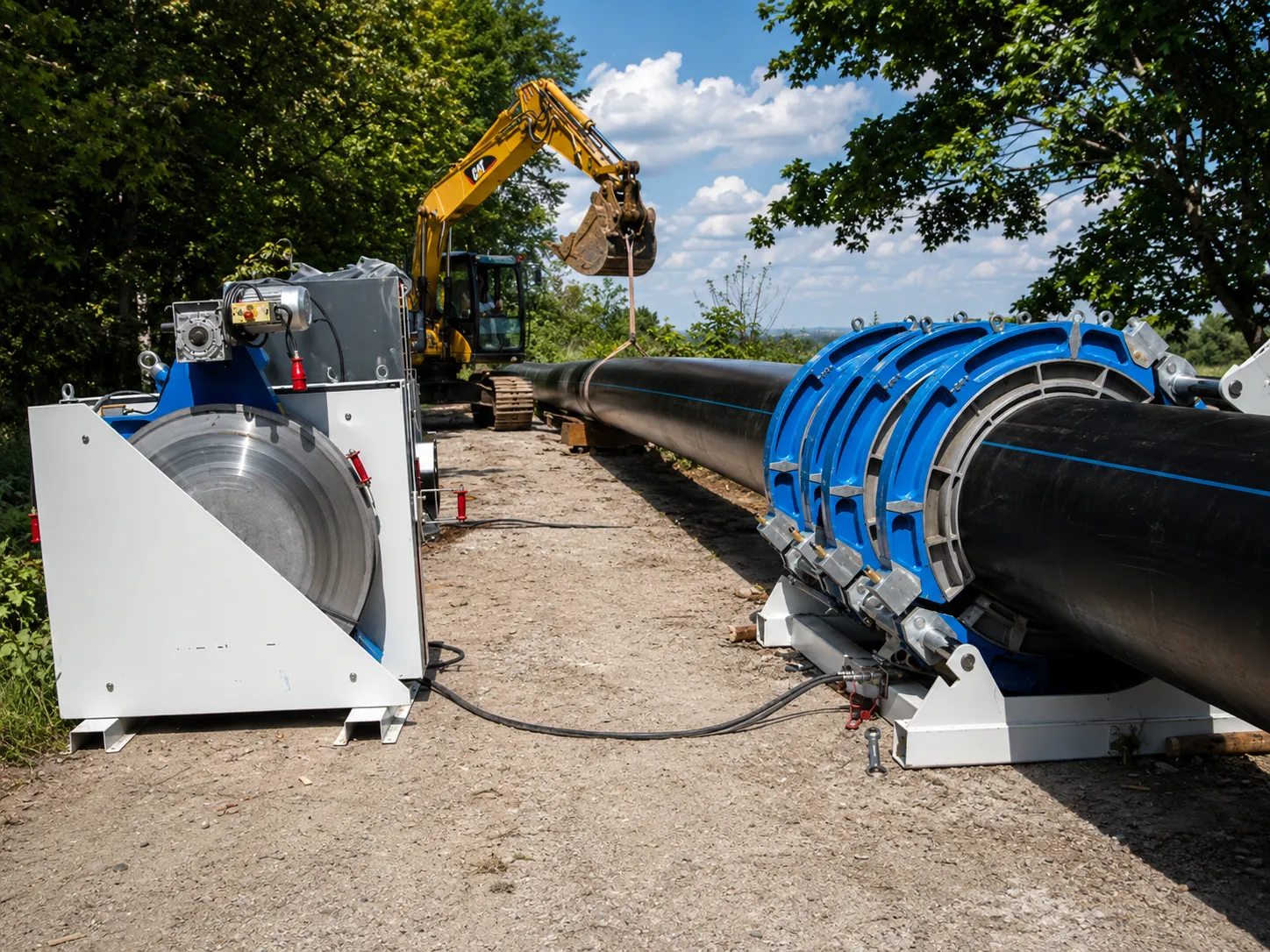
Polyethylene pipe welding
Butt and electrofusion welding of polyethylene pipes with logged parameters and quality control of every weld.
How the work is carried out
A simplified scheme of the key stages. Scroll to see the sequence.
Typical applications
- Welding pipe strings for HDD and renovation
- Installation of PE water and gas networks
- Tie-ins, connections to valves and fittings
- Field welding at the customer’s site
Things to consider
- Weld quality depends on weather — shelters are used in rain/frost
- Gas networks require certified welders and parameter logs
Technical capabilities
Work stages
- 01
Survey
Site visit, initial data collection; tracing and video diagnostics if needed.
- 02
Estimate & quote
Engineering calculation, technology and material selection, commercial proposal.
- 03
Preparation
Method statement, equipment mobilization, pit and site setup.
- 04
Execution
Work under the approved design with quality control at every stage.
- 05
Testing & handover
Pressure testing, video check, as-built documentation, acceptance act.
What the customer gets
- Acceptance act and as-built documentation
- Testing / pressure test results
- Warranty obligations
FAQ
Butt or electrofusion — which to choose?
Butt welding is efficient on straight large-diameter sections; electrofusion — in tight spaces, tie-ins and repairs. We select the method per task.
How is weld quality confirmed?
Welding parameter logs are kept, welds are visually inspected and the network is pressure-tested.