
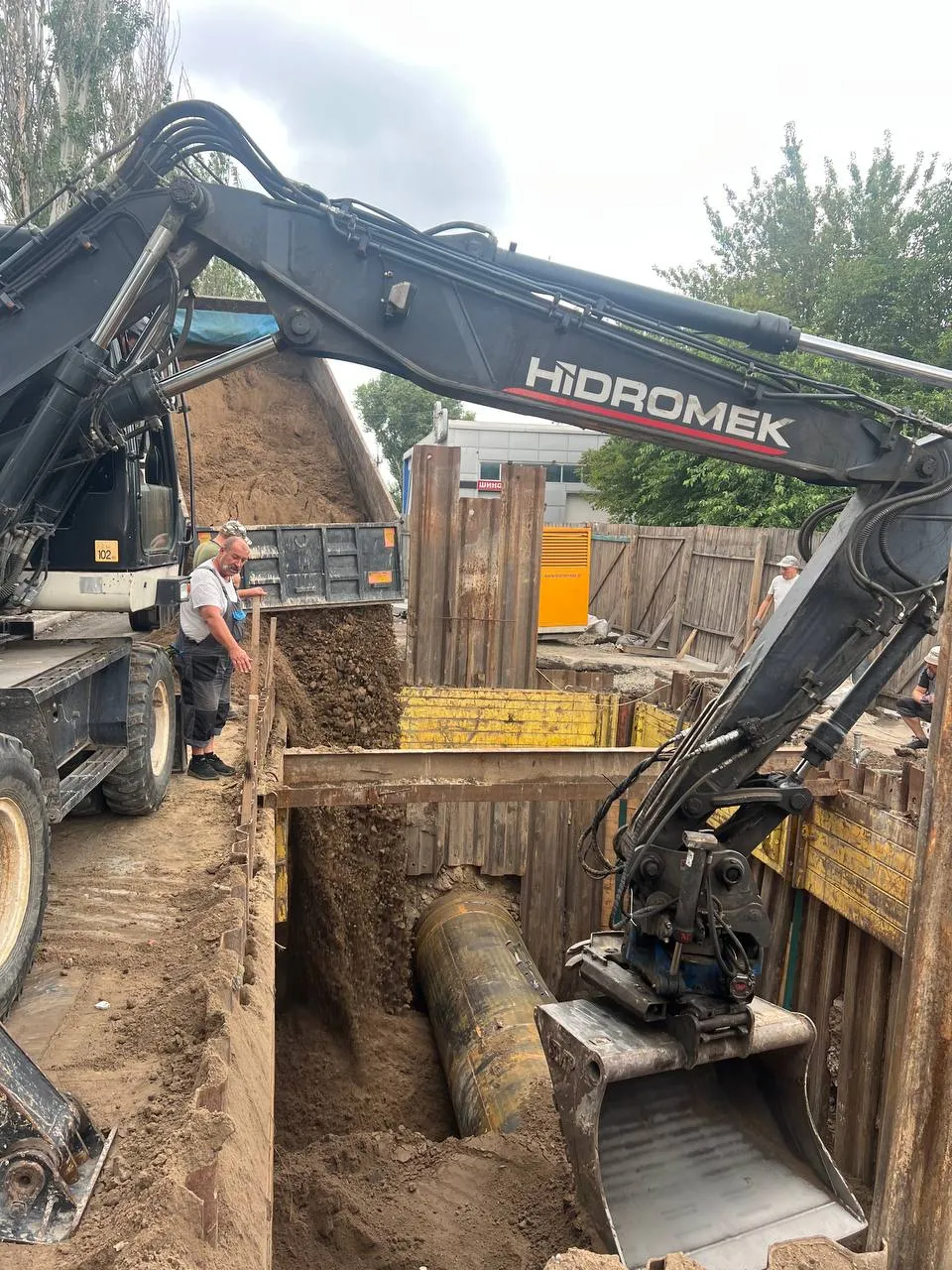
Open-cut (trench) method
Classic construction and repair of external networks with trench excavation — when open-cut is more rational than trenchless.
How the work is carried out
A simplified scheme of the key stages. Scroll to see the sequence.
Typical applications
- New construction on open land without hard surfacing
- Shallow networks with free access to the route
- Gravity sewerage with precise slope control
- Combined work: network + manholes + landscaping restoration
Things to consider
- In dense development, under roads and utilities HDD is usually more rational
- Water-saturated soils require construction dewatering
- Pavement and landscaping restoration is included in the estimate
Technical capabilities
Work stages
- 01
Survey
Site visit, initial data collection; tracing and video diagnostics if needed.
- 02
Estimate & quote
Engineering calculation, technology and material selection, commercial proposal.
- 03
Preparation
Method statement, equipment mobilization, pit and site setup.
- 04
Execution
Work under the approved design with quality control at every stage.
- 05
Testing & handover
Pressure testing, video check, as-built documentation, acceptance act.
What the customer gets
- Acceptance act and as-built documentation
- Testing / pressure test results
- Warranty obligations
FAQ
When is open-cut better than HDD?
On open land without surfacing, at shallow depths and when full access to the route is needed — open-cut is cheaper and allows precise slope control.
Do you restore the surface after work?
Yes, pavement and landscaping restoration is part of the design and estimate.
How is installation quality controlled?
We control bedding preparation, trench shoring, layered compacted backfill and test the network.